The Evolution of the Modern Workspace
The way people approach work has changed dramatically over the last decade. Remote jobs, hybrid offices, and flexible schedules have transformed the traditional idea of a workspace. Instead of static desks and rigid office layouts, many professionals now seek environments that encourage comfort, productivity, and long-term well-being.
At the center of this shift is the growing awareness that physical surroundings can influence both focus and health. Sitting for long hours has been linked to back discomfort and fatigue, leading many workers to rethink how their workspace is designed. As a result, modern offices—both at home and in corporate environments—are increasingly built around adaptability and ergonomic design.
©Vernal Space
The Rise of Ergonomic Furniture
One of the most noticeable changes in recent years is the growing popularity of adjustable and ergonomic furniture. Desks that allow users to alternate between sitting and standing are no longer rare; they have become a common feature in many modern workplaces. Platforms such as height-adjustable desk solutions illustrate how workspace furniture has evolved to support healthier work habits and flexible environments.
Ergonomic furniture focuses on supporting natural posture and reducing strain during long periods of work. Many adjustable desks are designed with stability and smooth height adjustment in mind, making it easier for users to switch positions throughout the day. Companies that develop these solutions often emphasize durable materials, careful engineering, and practical design so that workspaces remain both functional and comfortable. According to customer reviews and company information, some manufacturers specialize in modular desk systems that prioritize stability and long-term usability for both home offices and professional environments.
Balancing Performance and Aesthetics
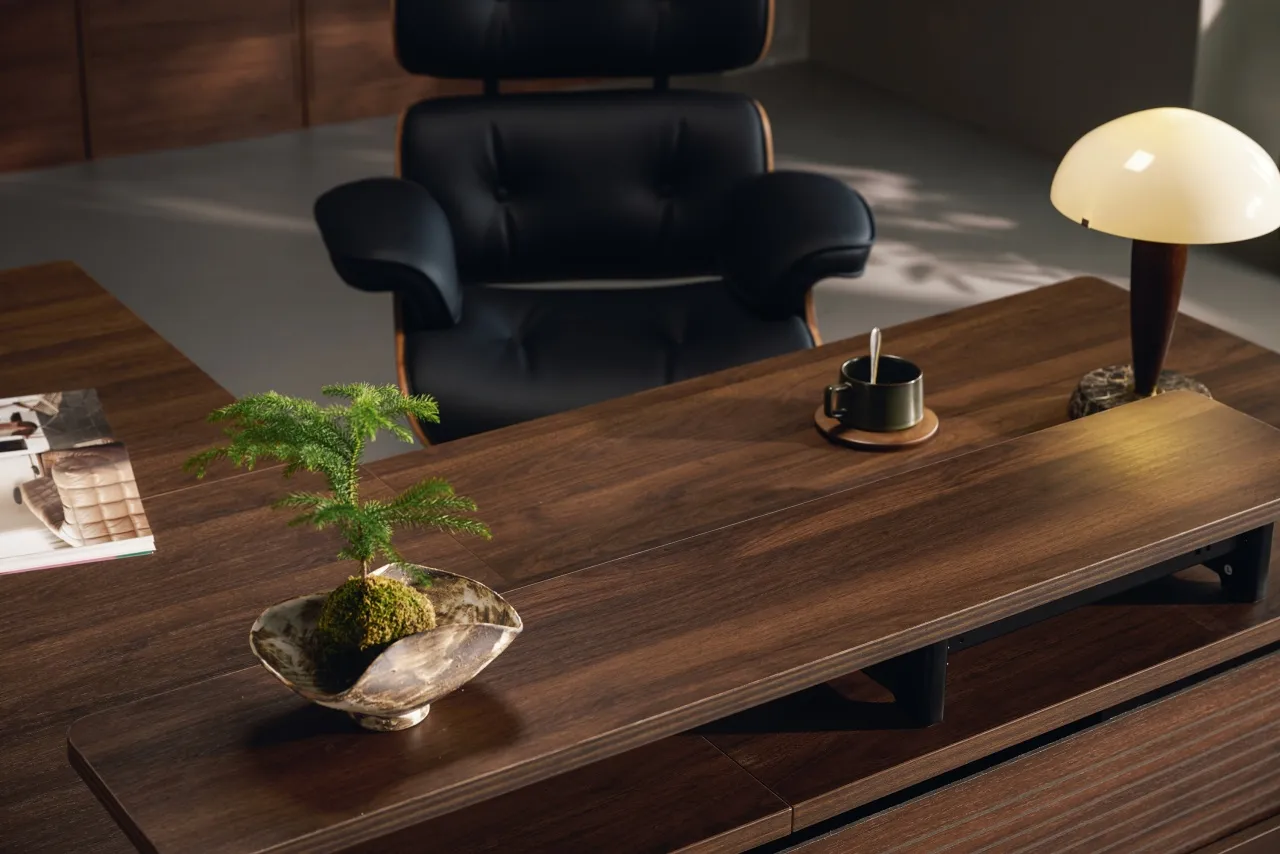
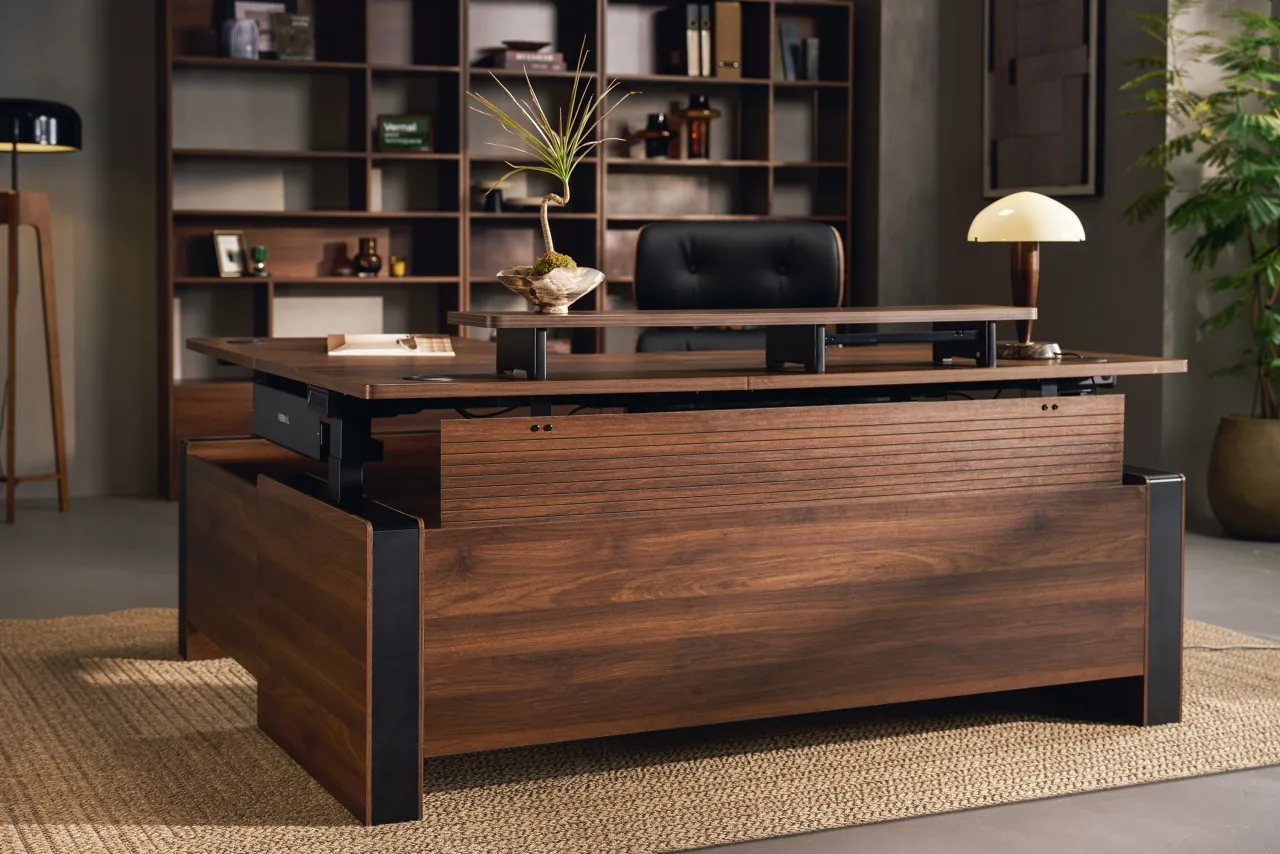
Modern workspaces are expected to do more than simply function well—they must also fit naturally into the environments where people live and work. A well-designed standing desk can balance visual appeal with structural performance. For example, a natural wood grain tabletop paired with a patented cross-grid frame structure creates a warm, organic appearance while maintaining exceptional strength and stability, supporting weight capacities of up to 180 kg.
Home offices, in particular, require furniture that blends seamlessly with living spaces. Instead of looking overly technical or industrial, contemporary desk designs often integrate refined materials and minimalist structures that complement modern interiors. This combination allows users to maintain a professional work setup without disrupting the overall aesthetic of the room.
©Vernal Space
A Work Environment Reducing “Hidden Distractions”
One often overlooked aspect of workspace design is the impact of visual clutter. Tangled cables and poorly organized equipment can subtly disrupt concentration and make a workspace feel chaotic. Even when these elements are not consciously noticed, they can affect the overall sense of order and focus.
For this reason, many users seek desks that incorporate integrated cable management systems. These solutions help keep both the desktop and the under-desk area tidy, reducing visual noise and allowing people to focus more fully on their tasks. A clean and organized workspace not only looks better but can also contribute to a calmer and more reassuring working environment.
An Investment for Long-Term Use
As remote and hybrid work continue to shape modern work habits, many people now see office furniture as a long-term investment rather than a temporary solution. Standing desks, in particular, benefit from thoughtful engineering that prioritizes durability, reliability, and sustainability.
Manufacturers increasingly emphasize rigorous testing and certification by independent institutions to ensure their products meet safety and performance standards. Brands such as Vernal, for example, highlight quality assurance processes and structural testing to demonstrate long-term reliability. For users who depend on their workspace every day, this level of quality control provides confidence that their desk will remain stable and functional for years.
Looking Ahead: The Future Workspace
As technology and work culture continue to evolve, workspace design will likely continue to adapt. Smart desks, integrated lighting systems, and AI-assisted workspace management are already being explored by some manufacturers.
Despite these innovations, the core objective remains the same: creating environments that help people work effectively while maintaining their well-being.
Modern workspaces are increasingly designed to harmoniously blend aesthetics with functionality. By combining structural performance, thoughtful organization, and long-term durability, ergonomic furniture helps create environments that support both productivity and comfort—whether in a corporate office or a home workspace.